(C) · PRODUCT & IP DEVELOPMENT

RAVENTRYX LLC

Most AI pilots never reach production. We build AI systems that ship.

Most enterprise AI work stalls between proof-of-concept and production, and a large share is abandoned before it ever runs live. We design, integrate, and operate them to production standard, owned by you end to end. The pilot becomes a product that runs reliably, with the five-year cost clear before you commit.

When you need this

You have a proof-of-concept that convinced the board but stalled at the handoff. Or a build-versus-buy decision where the differentiating capability cannot go off-the-shelf. Your team tried to staff it in-house. Eighteen months in, it is still six months from production. You need a partner who will hold accountability from first principles through go-live, with IP assignment and ownership transfer documented from the start. That is what structured AI implementation services are built to deliver: a shipped system, owned by you, with the integration discipline to make it run.

How we work it

How this actually goes.

  1. 01

    Scope to production, not proof-of-concept

    Every engagement is scoped to a shipped system, with a go-live target set at the start and held to. We run the build-versus-buy test first: if the capability is a commodity, a supported vendor product buys time; if it is strategically differentiating and you own the IP, we build it. You get a scoped decision before any line of code, not a six-month statement of work that drifts into discovery.

  2. 02

    Build and integrate, holding the hardest path

    Integration is the blocking problem. Industry research consistently identifies system integration as the primary barrier to AI production deployment. Not the model; not the data; not the infrastructure. The knot that threads the AI through your ERP, your CRM, your data warehouse, and your operational workflows. We own the integration path, the data contracts with your legacy systems, and the orchestration across multiple models or agents. You get a production system that lives in your stack, not a vendor's demo environment. Multi-agent coordination, vector stores at scale, fine-tuning infrastructure, monitoring chains. The design accounts for your operational reality, not just the model's capability. Ownership and maintenance are designed in from day one, not bolted on after shipping.

  3. 03

    Ship and hand over the ownership, fully costed

    We deliver a running system, your team maintains it, and the engagement closes on a plan we agree in advance. The five-year total cost of ownership (compute, monitoring, updates, scaling) is modeled and transparent, not discovered in the cloud bill twelve months later. Ownership terms (who holds the code, the models, and the data contracts) are written into the commercial terms before the first sprint. You walk away with something you own, can operate, and can defend to an investor or a board. The runbooks, model-version logs, and monitoring dashboards transfer with the code, so your engineers can modify the system six months from now without hunting for institutional knowledge. We design dependency out at the architecture stage, not the handover stage.

What's included

The capability, in full.

The right call first

Know whether this belongs built or bought.

Not every AI capability needs a custom build. We test whether an off-the-shelf product, an API integration, or a vendor SaaS buys you time and meets your risk profile, before committing to a 12–18 month internal build. If custom is the answer, you know why and what the five-year carry-cost looks like. The test happens upfront; the decision moves.

Start a conversation

What you get

AI running reliably in production, owned end to end.

01

The pilot becomes a product instead of drifting forever.

The gap between organizations that adopt AI and those that run it in production is ownership discipline and integration rigor, not the underlying technology. The system ships, runs reliably, and earns its cost. Return starts accruing when the system is live and owned by your team, not when the pilot is signed off.

Pilot to production
02

You own the asset and can operate it on your terms.

Custom AI builds often leave the acquirer or the team unable to maintain what was built. Not here: the codebase is documented, the models are versioned, and the team inheriting it can modify the system without tracking down the engineers who built it. Ownership is settled; the architecture was designed from the start to run without us. The build-versus-buy decision gives you the right construct from the start; the integration discipline keeps you out of vendor lock-in.

Documented and maintainable

03

The five-year cost is clear before commitment.

Most AI deployments carry meaningful ongoing spend on compute, monitoring, and updates after launch, a reality that arrives as a shock when teams expected deployment cost to be the final cost. We price it upfront, model the scaling path, and you know the full carrying cost before you sign. No discoveries after go-live. This is the difference between a cost center and an asset.

TCO transparent from day one

When the AI you build triggers regulatory obligations

Shipping an AI system into production is not only an engineering milestone. Depending on where and how it is deployed, it can create legal obligations. The AI systems you build may trigger EU AI Act Article 26 deployer obligations: a US company that deploys a third-party or in-house AI system affecting people in the EU is bound as a deployer regardless of who built the underlying model. That means human oversight, transparency to affected people, monitoring, and record-keeping, obligations that attach at deployment, not at the model layer.

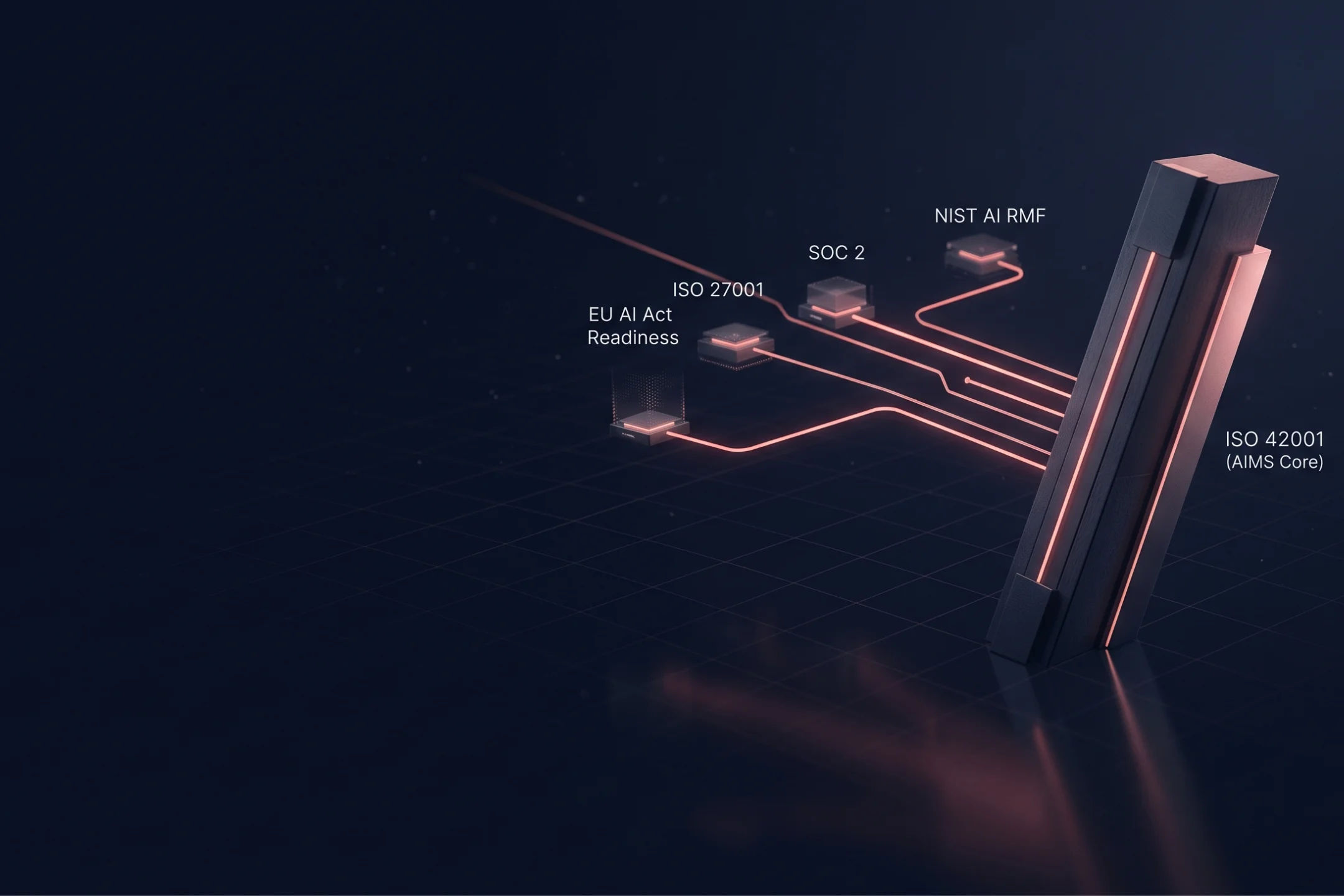
We design implementation engagements so this is anticipated rather than discovered. The monitoring chains, logging, and documentation we build for operational reliability are the same artifacts a deployer needs to demonstrate oversight and traceability. Where your system falls inside the AI Act's scope, our AI Governance capability (one of five capabilities we operate, not the brand) maps the controls to Article 26 and ISO 42001. See the depth behind it at /services/ai-governance.

Frequently asked questions

Why do most AI pilots never reach production?

The blocking problem is almost never the model; it is integration. Threading an AI system through your ERP, CRM, and data warehouse, with data contracts and monitoring that hold under real traffic, is where pilots stall. We scope every engagement to a shipped system with a go-live target set at the start, and we own the integration path rather than handing back a demo environment.

Who owns the code, models, and data contracts when the engagement ends?

You do, and the terms are written into the commercial agreement before the first sprint, not discovered at handover. The runbooks, model-version logs, and monitoring dashboards transfer with the code, so your engineers can modify the system months later without hunting for institutional knowledge. We design dependency out at the architecture stage.

How do you decide whether to build or buy an AI capability?

We run the build-versus-buy test first, before any code. If the capability is a commodity, a supported vendor product buys time. If it is strategically differentiating and you should own the IP, we build it, and we model the five-year total cost of ownership (compute, monitoring, updates, scaling) so the number is transparent up front rather than surfacing in a cloud bill a year later.

Regulatory information only. The frameworks, timelines, and standards referenced here reflect our reading of the EU AI Act (Regulation 2024/1689) and related instruments (including GPAI / Article 53 and the Digital Omnibus deferral) as of the review date below. Regulatory guidance and implementation timelines continue to evolve and may change. Nothing here is legal advice, and reading it does not create an advisory relationship. For guidance specific to your organization, consult qualified legal or compliance counsel. Last reviewed: July 28, 2026.

Engage

Scoping is the easy part.

How a mandate works

  1. 01

    Scope it

    We start with a working session on the outcome, the constraints, and the timeline, not a long intake form. We pressure-test the fit and shape the mandate before anything is committed.

  2. 02

    We scope

    You get a written scope: what ships, the critical path, the dependencies that move the date, and a fixed view of cost and ownership. Agreed before the first sprint.

  3. 03

    We build

    We take the operational seat and ship to production, staying in it through go-live, not until the build is technically done. The IP is yours, assigned in writing.

What you walk away with

  • A named senior engagement lead who owns the mandate end to end: no hand-off to a rotating team.

  • A written scope with the outcome, critical path, and IP assignment fixed before work starts.

  • Production delivery plus the operating docs to run it after we step back.

No retainer to start. No automated drip sequence. A real person, not a bot, replies within one business day. And if we’re not the right fit, we’ll tell you who is.

Proof

The pilot that convinced the board but stalled at handoff is now in production and owned by our team. They held accountability through go-live instead of returning a demo.

Chief Technology Officer · Enterprise Insurance Platform

Anonymized. Representative engagement archetypes drawn from real mandates; client identities withheld.

How a build starts.

By conversation
  • Scoped per mandate, priced to the work
  • You own the IP, assigned in writing
  • A person replies within one business day

AI running reliably in production, owned end to end.